Energia solar de janela: mito ou solução real?
Explore the viability of using window solar energy in Brazil—and find out if it’s truly the groundbreaking solution it’s touted to be or remains purely a myth.
Promising self-sufficiency through window-installed solar films has intrigued many Brazilians. Especially those looking to economize on electricity bills in apartments.
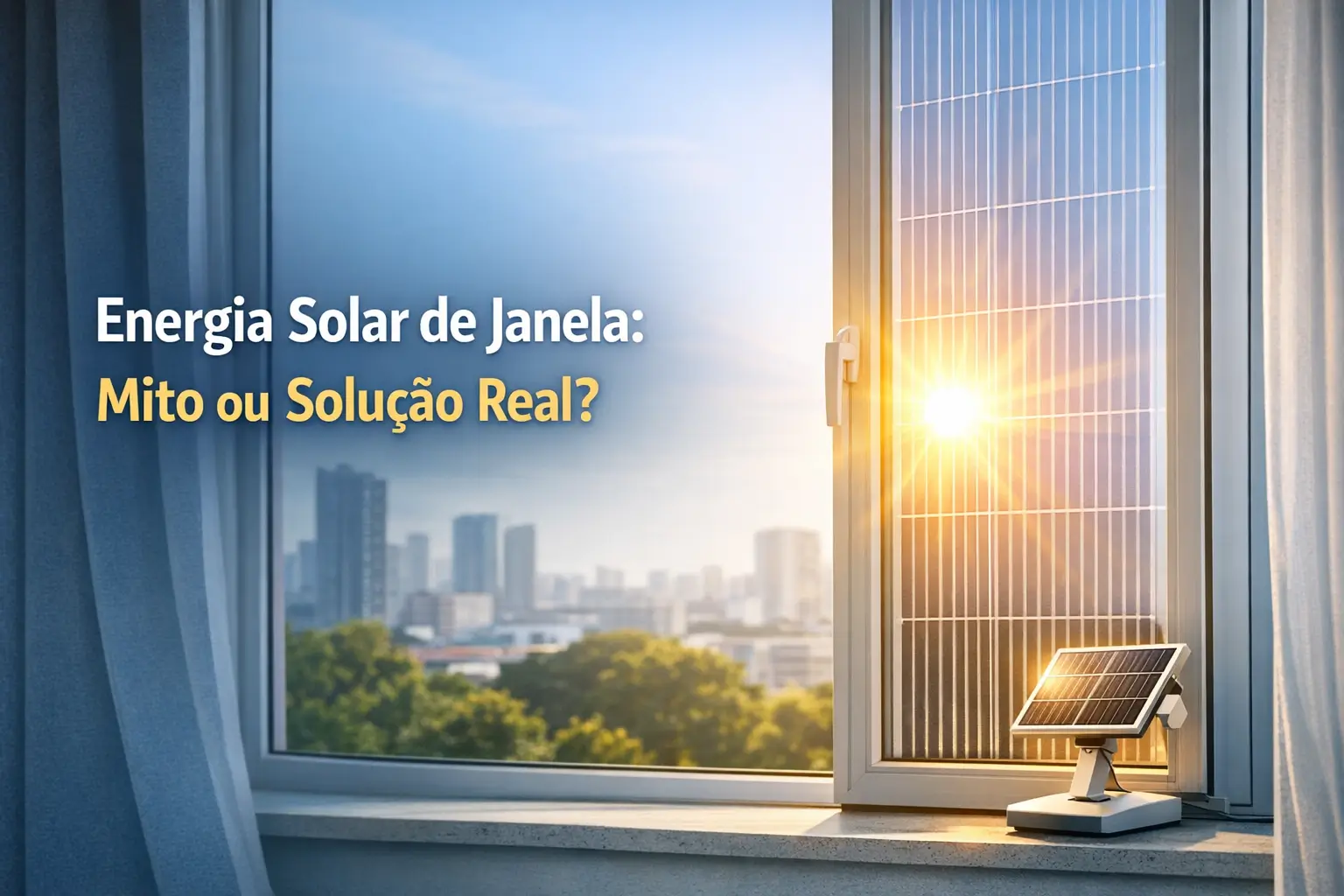
Despite exciting headlines, the reality can be starkly different. How feasible is this tech for a typical Brazilian household? Let’s dive in to uncover the truth.
Why Window Solar Energy Struggles in Brazil
Brazil is a sunlit nation, but not all tech leverages this blessing equally. Window solar energy, although fascinating, lags in key ways.
Unlike rooftop solar PV panels, window applications face serious limitations like improper angles, urban shading, and noticeable energy inefficiency.
The average apartment setting in Brazil compounds this issue, with common 80-120m² spaces providing limited window surface for energy capture.
O que Mais Você Gostaria de Saber?
Escolha abaixo:
Understanding Window Solar Technology
Here’s the idea: solar panels or films on windows absorb sunlight, turning it into energy, much like standard photovoltaic panels but using less space.
The reality? Thin-film panels, including perovskite-based prototypes, are heavily constrained by shadow interruptions and require constant cleanliness.
This technology, still evolving globally, hasn’t yet adapted to suit the specific sunlight intensity and urban settings of Brazil’s larger cities.
Rooftop PV Panels: Dominating the Solar Market
Brazil’s energy experts widely prefer rooftop PV systems. Why? Their high efficiency and supportive government policies make them a no-brainer investment.
From São Paulo to Ceará, families are installing 3-7kWp kits, producing stable energy output. These systems cut energy tariffs, creating long-term savings.
Paired with net metering, these setups have transformed lives. Even a 5kWp installation can drastically reduce bills, as practical examples reveal.
Real User Insights: The São Paulo Story
Take Pedro, a São Paulo resident. Tired of steep bills, he first installed window films. Two months later, he realized they weren’t meeting his needs.
Switching to a rooftop PV system, Pedro saw bills drop 70% in under six months, slashing costs from R$450 to R$135 monthly. The upshot? True independence.
This transformation mirrors what experts echo: Rooftop solar efficiently uses Brazil’s sunlight while reliably meeting energy needs, unlike window films.
The Agribusiness Advantage: Hybrid Solutions
For Brazil’s rural regions, hybrid systems integrating PV solar, batteries, and diesel backups stand out as transformative solutions.
Small farms around Rio Grande do Norte use hybrid configurations, maximizing solar peaks during the day and battery storage at night for irrigation systems.
This combination cuts energy costs by up to 40% and powers operational efficiency, showcasing feasibility in agribusiness, a reality miles ahead of window films.
Challenges of Window Solar Tech
Window solar suffers from visibly low efficiency. Local trials yield just 5-10% efficiency due to dirt, shading, and poor alignment.
Positioning and maintenance woes also hold this innovation back. Shading from nearby structures further disrupts any real returns.
While it sounds modern and futuristic, window films risk becoming obsolete in practical Brazilian contexts without major advancements to address these hurdles.
Transformation in Energy Trends
Brazil’s solar journey promises innovation beyond rooftop and ground-mounted PV with advancements in integrated battery systems and smart microgrids.
Looking ahead, affordable advancements pushing smarter energy storage can help empower urban apartments, closing gaps left by ineffective tech like window solar.
Solutions like these truly empower households to become “energy agents,” balancing consumption with optimized, renewable-centric systems around 2026.
Practical Takeaways for Brazilian Homes
- Opt for rooftop PV panels tailored to your energy needs to maximize sunlight exposure.
- Consider hybrid solutions for rural setups combining solar and other backups.
- Evaluate net metering policies for additional savings through energy credits.
Before adopting any new solar tech, carefully assess whether it fits your home’s layout, energy needs, and long-term goals to make every quilowatt-count.
Quais equipamentos foram feitos para durar mais e consumir menos
» Veja dicas de Moda e Beleza exclusivas para você